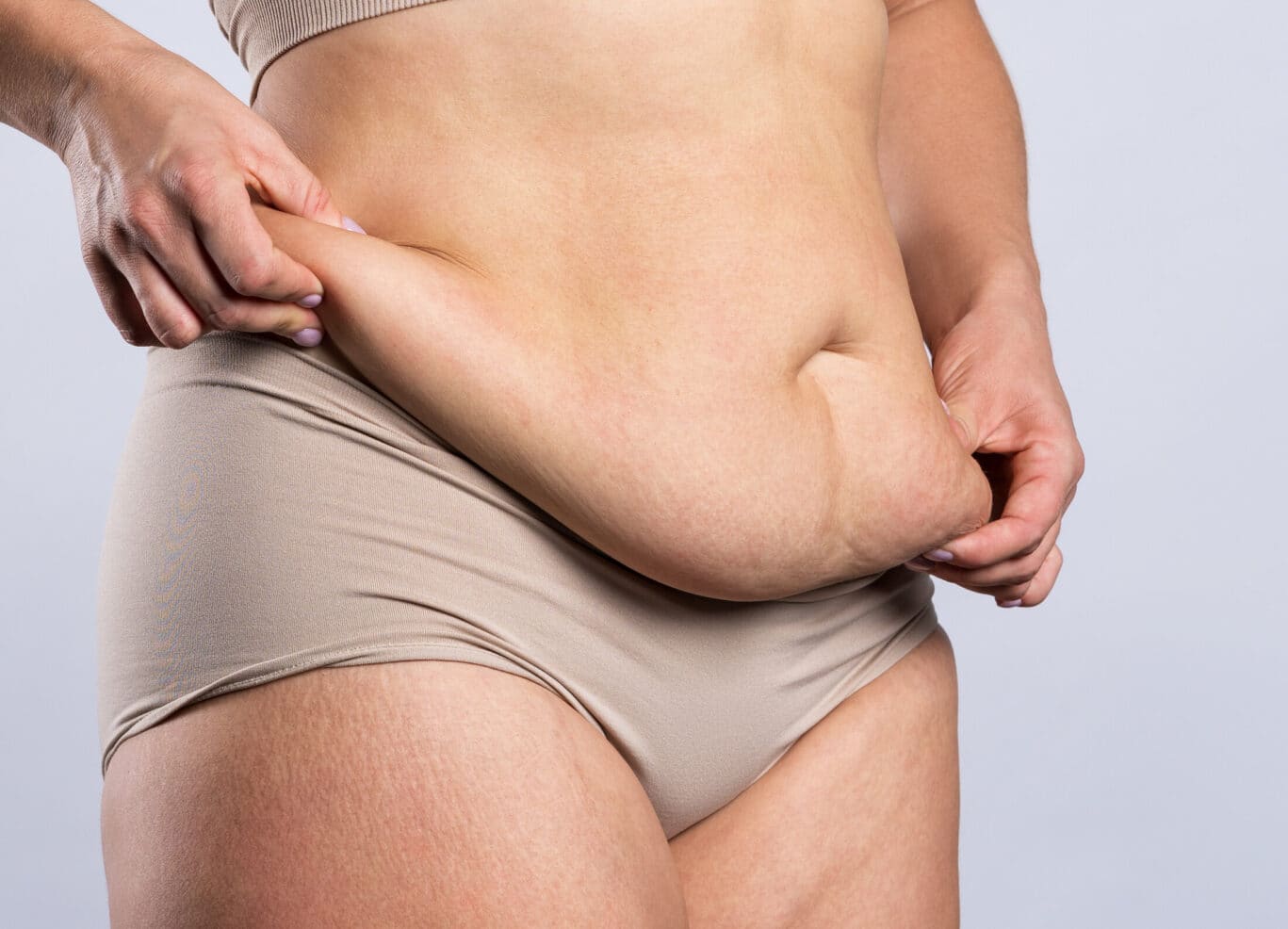
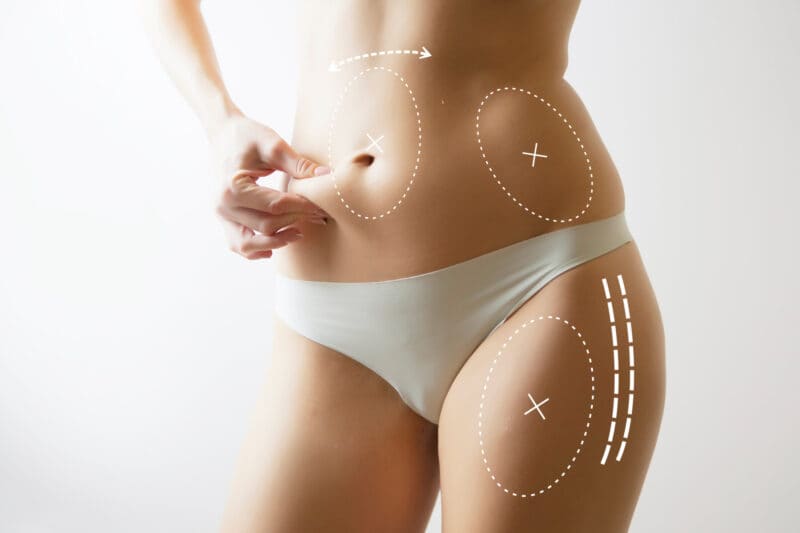
The right approach depends on how much skin laxity you have and where it’s concentrated.
A mini abdominoplasty is a more limited procedure, suited to patients with a small amount of loose skin confined to the lower abdomen, below the belly button. The incision is shorter, the belly button isn’t moved, and recovery tends to be a little quicker.
A full abdominoplasty is the most commonly performed technique. It addresses the lower and middle abdomen, tightens the underlying muscles, and repositions the belly button to sit naturally in its new position. It’s the most appropriate choice for the majority of patients, including those with muscle separation (rectus diastasis) following pregnancy or weight changes.
A fleur-de-lis abdominoplasty is used when there is significant excess skin in both directions (horizontally and vertically), which is most common after substantial weight loss. It involves an additional vertical incision along the midline, which allows for greater tightening and reshaping. The trade-off is a more visible scar pattern, and this will always be discussed carefully with you during your consultation.
Your surgeon will assess your abdomen thoroughly and recommend the technique most likely to achieve the best result for your individual anatomy and goals.